Expert advocates citizen-focused new health system for Nigeria

Emeritus Professor Oladipo Akinkugbe has called for a new health system that is tailored to the needs of the ordinary man in the street

Why Nigerians defecate publicly

Special report on why improved public awareness is not enough to reduce public defecation in Nigeria

First aid tips to save accident victims

The first few minutes of a medical emergency are always critical, but nearly two thirds of us admit we wouldn’t know what to do

Study identifies risk factors associated with neonatal deaths in Nigeria

A new study has identified risk factors associated with neonatal deaths in Nigeria using the 2008 Nigeria Demographic and Health Survey

Doctors call for Lassa fever treatment centers in south east Nigeria

The South East zonal caucus of Nigeria Medical Association (NMA) has enjoined the Nigerian government to establish health centres and facilities where Lassa fever patients could be treated and managed

Handshakes spread more germs than fist bumps, new study reveals

A new study conducted in UK said fist bumps spread far fewer germs than the traditional handshake, and even the high five.

Novartis launches new high quality antimalarial formulation of Coartem for Africa

Novartis has announced today the launch of a new high quality antimalarial formulation of Coartem® 80/480 (artemether/lumefantrine 80 mg/480 mg), for the treatment of uncomplicated malaria in adults and older children who weigh above 35kg. 
The drug has been registered by the Pharmacy and poisons board in Kenya and has already been launched in Nigeria and Angola. Kenya is the 3rd country in Africa to launch Coartem 80/480. Other countries that have registered Coartem 80/480 include Uganda and Ghana.

Ebola outbreak in West Africa out of control - Doctors without Borders

The Ebola virus epidemic in Guinea, Sierra Leone and Liberia is "out of control," the medical charity Doctors without Borders said Monday as the World Health Organization works to enhance its response.

Our children are getting fatter - WHO

Dr Margaret Chan, Director-General of the World Health Organization (WHO) has decried the global increase in childhood obesity. She said this in her opening address to the 67th World Health Assembly in Geneva, Switzerland.

WHO releases guidelines on treatment of hepatitis C

The World Health Organization (WHO) has issued its first guidance for the treatment of hepatitis C, a chronic infection that affects an estimated 130 million to 150 million people and results in 350 000 to 500 000 deaths a year. 

Nigeria in great danger of Ebola virus disease outbreak - health minister

Even though it had earlier said there was no Ebola virus disease outbreak in Nigeria, Nigerian government through the Federal Ministry of Health has said the spread of Ebola Virus Disease to neighbouring West African countries has put Nigeria in danger.

There are no effective vaccines for most vector-borne diseases - Chukwu

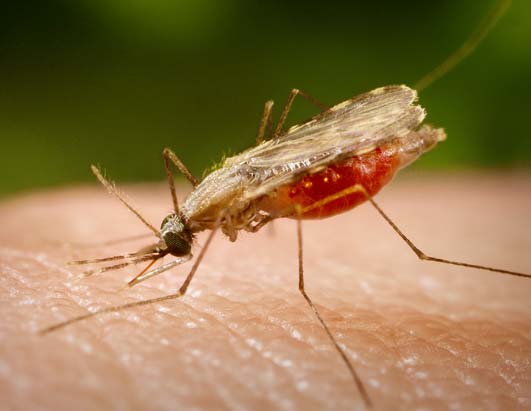
Nigeria's minister of health, Prof. Onyebuchi Chukwu has declared there are no effective vaccines for most vector-borne infections. He said this while speaking to newsmen activities marking this year’s World Health Day with the theme "Vector-borne diseases - small bites, big threats".

[CME] Roles of STD detection and treatment in HIV prevention

Testing and treatment of sexually transmitted diseases (STDs) can be an effective tool in preventing the spread of HIV, the virus that causes AIDS. An understanding of the relationship between STDs and HIV infection can help in the development of effective HIV prevention programs for persons with high-risk sexual behaviors.
What is the link between STDs and HIV infection?
Individuals who are infected with STDs are at least two to five times more likely than uninfected individuals to acquire HIV infection if they are exposed to the virus through sexual contact. In addition, if an HIV-infected individual is also infected with another STD, that person is more likely to transmit HIV through sexual contact than other HIV-infected persons (Wasserheit, 1992).
here is substantial biological evidence demonstrating that the presence of other STDs increases the likelihood of both transmitting and acquiring HIV.
  • Increased susceptibility. STDs appear to increase susceptibility to HIV infection by two mechanisms. Genital ulcers (e.g., syphilis, herpes, or chancroid) result in breaks in the genital tract lining or skin. These breaks create a portal of entry for HIV. Additionally, inflammation resulting from genital ulcers or non-ulcerative STDs (e.g., chlamydia, gonorrhea, and trichomoniasis) increase the concentration of cells in genital secretions that can serve as targets for HIV (e.g., CD4+ cells).
    • Increased infectiousness. STDs also appear to increase the risk of an HIV-infected person transmitting the virus to his or her sex partners.  Studies have shown that HIV-infected individuals who are also infected with other STDs are particularly likely to shed HIV in their genital secretions. For example, men who are infected with both gonorrhea and HIV are more than twice as likely to have HIV in their genital secretions than are those who are infected only with HIV. Moreover, the median concentration of HIV in semen is as much as 10 times higher in men who are infected with both gonorrhea and HIV than in men infected only with HIV.  The higher the concentration of HIV in semen or genital fluids, the more likely it is that HIV will be transmitted to a sex partner.
    How can STD treatment slow the spread of HIV infection?
    Evidence from intervention studies indicates that detecting and treating STDs may reduce HIV transmission.
    • STD treatment reduces an individual's ability to transmit HIV. Studies have shown that treating STDs in HIV-infected individuals decreases both the amount of HIV in genital secretions and how frequently HIV is found in those secretions (Fleming, Wasserheit, 1999).
    • Herpes can make people more susceptible to HIV infection, and it can make HIV-infected individuals more infectious.  It is critical that all individuals, especially those with herpes, know whether they are infected with HIV and, if uninfected with HIV, take measures to protect themselves from infection with HIV.
    • Among individuals with both herpes and HIV, trials are underway studying if treatment of the genital herpes helps prevent HIV transmission to partners.
    What are the implications for HIV prevention?
    Strong STD prevention, testing, and treatment can play a vital role in comprehensive programs to prevent sexual transmission of HIV. Furthermore, STD trends can offer important insights into where the HIV epidemic may grow, making STD surveillance data helpful in forecasting where HIV rates are likely to increase. Better linkages are needed between HIV and STD prevention efforts nationwide in order to control both epidemics.
    In the context of persistently high prevalence of STDs in many parts of the United States and with emerging evidence that the U.S. HIV epidemic increasingly is affecting populations with the highest rates of curable STDs, the CDC/HRSA Advisory Committee on HIV/AIDS and STD Prevention (CHAC) recommended the following:
    • Early detection and treatment of curable STDs should become a major, explicit component of comprehensive HIV prevention programs at national, state, and local levels;
    • In areas where STDs that facilitate HIV transmission are prevalent, screening and treatment programs should be expanded;
    • HIV testing should always be recommended for individuals who are diagnosed with or suspected to have an STD.
    • HIV and STD prevention programs in the United States, together with private and public sector partners, should take joint responsibility for implementing these strategies.
    CHAC also notes that early detection and treatment of STDs should be only one component of a comprehensive HIV prevention program, which also must include a range of social, behavioral, and biomedical interventions.

    Source: CDC

AMP lauds Nigeria’s new last mile model for distribution of health commodities


The Alliance for Malaria Prevention (AMP) has recognized the USAID DELIVER PROJECT in Nigeria and its partners with an award for their work initiating and implementing the Direct Delivery and Information Capture (DDIC) model. 

New drug approved for the treatment of Hepatitis C

The European Commission has approved the use of Gilead Sciences Inc's high-profile new hepatitis C drug Sovaldi  across the European Union.

Nigeria to become polio free in December - minister

In spite of the poor performance of northern Nigeria in polio eradication, Nigeria's health minister, Prof. Onyebuchi Chukwu has announced that the nation would be declared polio-free before the end of the year.

State in Nigeria records 153 new cases of cholera in 2014

11 persons were killed by cholera outbreak in Jigawa, the state commissioner for health Dr Abubakar Tafida, has said.

Nigeria certified guinea worm free by WHO

Nigeria is now a guinea worm-free country according to the World Health Organization (WHO). This was disclosed by the health minister, Prof. Onyebuchi Chukwu while presenting the WHO certificate of clean bill of health, to President Goodluck Jonathan at the State House at the first Federal Executive Council meeting in 2014, which was presided over by the President at the Council Chamber of the Presidential Villa.

ExxonMobil partners Akwa Ibom state on malaria eradication

Mark R. Ward, Managing Director of Mobil Producing Nigeria (MPN) and Lead Country Manager of ExxonMobil Subsidiary Companies in Nigeria, has expressed the commitment of ExxonMobil towards the eradication of malaria in Akwa Ibom state. 

Nigeria can tackle hepatitis through NHIS - NMA

Dr. Osahon Enabulele, president of the Nigerian Medical Association (NMA) has stated that Nigeria can reduce the incidence of hepatitis through the National Health Insurance Scheme (NHIS) through which infected individuals could have access to more affordable treatments - especially for individuals with liver cancer and liver failure.

Africa's Health Facilities Are Grossly Inadequate - WHO

A study carried out in several African nations has revealed that in all ramifications, health facilities in Africa are grossly inadequate. According to the research carried out in the African nations and published by the WHO's Regional Office for Africa, ordinary citizens across Africa are dissatisfied with the quality of healthcare services they are getting from public health facilities.

In the report of the research entitled Health Systems in Africa: Community Perceptions and Perspectives, the researchers identified health issues and challenges that Africans experience - these include diseases, health access and expectations from healthcare.

"In all, the report makes seven recommendations that cover a broader definition of health, reforms needed for infrastructure and health financing mechanisms, the value of community-based involvement in planning, surveillance and management of common problems, and broader research and sharing of best practices. The study illustrates the importance of community involvement in the governance of health services, and the input they can provide to improve both care and coverage," WHO stated.