Expert advocates citizen-focused new health system for Nigeria

Emeritus Professor Oladipo Akinkugbe has called for a new health system that is tailored to the needs of the ordinary man in the street

Why Nigerians defecate publicly

Special report on why improved public awareness is not enough to reduce public defecation in Nigeria

First aid tips to save accident victims

The first few minutes of a medical emergency are always critical, but nearly two thirds of us admit we wouldn’t know what to do

Study identifies risk factors associated with neonatal deaths in Nigeria

A new study has identified risk factors associated with neonatal deaths in Nigeria using the 2008 Nigeria Demographic and Health Survey

Doctors call for Lassa fever treatment centers in south east Nigeria

The South East zonal caucus of Nigeria Medical Association (NMA) has enjoined the Nigerian government to establish health centres and facilities where Lassa fever patients could be treated and managed

New plan will make HIV test compulsory before marriage in Nigeria

Nigerian government has released a new plan that makes HIV test compulsory for marriage in both Christian and Islam. The new National HIV/AIDS Prevention Plan is in a bid to prevent new infections and curb further spread of HIV/AIDS.

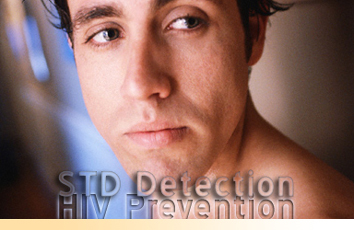
[CME] Roles of STD detection and treatment in HIV prevention

Testing and treatment of sexually transmitted diseases (STDs) can be an effective tool in preventing the spread of HIV, the virus that causes AIDS. An understanding of the relationship between STDs and HIV infection can help in the development of effective HIV prevention programs for persons with high-risk sexual behaviors.
What is the link between STDs and HIV infection?
Individuals who are infected with STDs are at least two to five times more likely than uninfected individuals to acquire HIV infection if they are exposed to the virus through sexual contact. In addition, if an HIV-infected individual is also infected with another STD, that person is more likely to transmit HIV through sexual contact than other HIV-infected persons (Wasserheit, 1992).
here is substantial biological evidence demonstrating that the presence of other STDs increases the likelihood of both transmitting and acquiring HIV.
  • Increased susceptibility. STDs appear to increase susceptibility to HIV infection by two mechanisms. Genital ulcers (e.g., syphilis, herpes, or chancroid) result in breaks in the genital tract lining or skin. These breaks create a portal of entry for HIV. Additionally, inflammation resulting from genital ulcers or non-ulcerative STDs (e.g., chlamydia, gonorrhea, and trichomoniasis) increase the concentration of cells in genital secretions that can serve as targets for HIV (e.g., CD4+ cells).
    • Increased infectiousness. STDs also appear to increase the risk of an HIV-infected person transmitting the virus to his or her sex partners.  Studies have shown that HIV-infected individuals who are also infected with other STDs are particularly likely to shed HIV in their genital secretions. For example, men who are infected with both gonorrhea and HIV are more than twice as likely to have HIV in their genital secretions than are those who are infected only with HIV. Moreover, the median concentration of HIV in semen is as much as 10 times higher in men who are infected with both gonorrhea and HIV than in men infected only with HIV.  The higher the concentration of HIV in semen or genital fluids, the more likely it is that HIV will be transmitted to a sex partner.
    How can STD treatment slow the spread of HIV infection?
    Evidence from intervention studies indicates that detecting and treating STDs may reduce HIV transmission.
    • STD treatment reduces an individual's ability to transmit HIV. Studies have shown that treating STDs in HIV-infected individuals decreases both the amount of HIV in genital secretions and how frequently HIV is found in those secretions (Fleming, Wasserheit, 1999).
    • Herpes can make people more susceptible to HIV infection, and it can make HIV-infected individuals more infectious.  It is critical that all individuals, especially those with herpes, know whether they are infected with HIV and, if uninfected with HIV, take measures to protect themselves from infection with HIV.
    • Among individuals with both herpes and HIV, trials are underway studying if treatment of the genital herpes helps prevent HIV transmission to partners.
    What are the implications for HIV prevention?
    Strong STD prevention, testing, and treatment can play a vital role in comprehensive programs to prevent sexual transmission of HIV. Furthermore, STD trends can offer important insights into where the HIV epidemic may grow, making STD surveillance data helpful in forecasting where HIV rates are likely to increase. Better linkages are needed between HIV and STD prevention efforts nationwide in order to control both epidemics.
    In the context of persistently high prevalence of STDs in many parts of the United States and with emerging evidence that the U.S. HIV epidemic increasingly is affecting populations with the highest rates of curable STDs, the CDC/HRSA Advisory Committee on HIV/AIDS and STD Prevention (CHAC) recommended the following:
    • Early detection and treatment of curable STDs should become a major, explicit component of comprehensive HIV prevention programs at national, state, and local levels;
    • In areas where STDs that facilitate HIV transmission are prevalent, screening and treatment programs should be expanded;
    • HIV testing should always be recommended for individuals who are diagnosed with or suspected to have an STD.
    • HIV and STD prevention programs in the United States, together with private and public sector partners, should take joint responsibility for implementing these strategies.
    CHAC also notes that early detection and treatment of STDs should be only one component of a comprehensive HIV prevention program, which also must include a range of social, behavioral, and biomedical interventions.

    Source: CDC

Late detection makes cancer a death sentence in Nigeria

An expert as described late detection as the reason why cancer is a death sentence in Nigeria. According to Dr Femi Olaleye, Medical Director of Optimal Cancer Care Foundation, cancer is fatal in Nigeria because of the non-existence of population screening initiatives.


[PERSPECTIVE] When should obesity prevention commence?

Obesity has pervaded the United States and is spreading throughout the world. Following in its wake is type 2 diabetes, which will affect at least half a billion people worldwide by 2030. A majority of U.S. women of childbearing age are overweight or obese (as defined by a body-mass index [BMI, the weight in kilograms divided by the square of the height in meters] >25). 

[OPINION] How public figures and celebrities can promote public health awareness and actions

Chibuike Alagboso
In July, internet and social media platforms were flooded with news of the birth of Prince George because people are much interested in the lives and times of the royal family and other celebrities.

Breastfeeding: WHO decries poor implementation of infant formula code

The World Health Organization today revealed that only 37 countries out of 199 countries (19 per cent) have laws that fully reflect the International Code of Marketing of Breast-milk Substitutes. 

Nigeria extends deadline for polio eradication

Indications have emerged that Nigeria may not be able to achieve the goal of totally eradicating polio this year as a result of several challenges such insecurity in the north and migration. 

Expert Calls For Newborn Screening For Sickle Cell Disorder

A medical expert has enjoined parents to request newborn screening for sickle cell disorder for their babies. According to Prof Ola Akinyanju, this is needed for early preventive care of children with sickle cell disorder (SCD).

[Dream Job] US CDC Recruiting Program Specialist For Abuja-based HIV Medical Transmission Prevention Program

Vacancy exists in Abuja, Nigeria for Program Specialist, HIV Medical Transmission Prevention at US Centers for Disease Control and Prevention (CDC). The call for applications which was officially announced on Wednesday May 19, 2013 will close on Tuesday May 28, 2013. 

In the official job opening announcement issued by the CDC and made available to HealthNewsNG, the CDC stated that the appointment is on full-time basis will see the successful candidate working 40 hours weekly.

"The U.S. Embassy in Abuja is seeking to employ suitable and qualified candidate for the Program Specialist, HIV Medical Transmission Prevention position in the Centers for Disease Control (CDC) Nigeria office in Abuja," CDC stated.

The successful candidate will be responsible for "the day-to-day program and administrative management, and coordination and collaboration with other PEPFAR agencies and implementation partners to ensure that project implementation addresses program strategic objectives and internationally recognized public health standards and best practices."

CDC added: "The job holder represents CDC Nigeria on HIV-MTP issues at technical, policy and strategic planning meetings, including meetings with collaborators and donor agencies."

Job Requirements

1. Post graduate degree (or higher) in Public Health, Medicine, Nursing or a related field is required.
2. Minimum of five (5) years’ work experience in HIV/AIDS prevention, care and support programs, including program planning, implementation, and evaluation is required.
3. The applicant should possess knowledge and experience in HIV Medical Transmission Prevention that indicates the ability to consult and collaborate effectively with all levels both within and outside the agency.
4. Applicant should possess comprehensive knowledge and experience in HIV prevention strategies, HIV/AIDS public health programs, methods, processes, and techniques used to plan, develop, implement and evaluate results of HIV prevention programs.
5. Level IV (fluency) Speaking/Writing in English is required.
6. Must have intermediate user level of word processing, spreadsheets and databases.

Application Process

1. Application for U.S. Federal Employment (DS-174); or a current resume or curriculum vitae that provides the same information as a DS-174; plus.
2. Any other documentation (e.g., essays, certificates, awards, copies of degrees earned) that addresses the qualification requirements of the position as listed above.
3. A type-written and signed application letter specifically applying for this position, and addressing the minimum requirements as advertised. Please reference the job title and announcement number on the application letter.


Applications should be sent to:

Embassy of the United States of America
Human Resources Office
Plot 1075 Diplomatic Drive
Central District Area
Abuja.

OR

Send via e-mail to HRNigeria@state.gov


Good luck from HealthNewsNG